
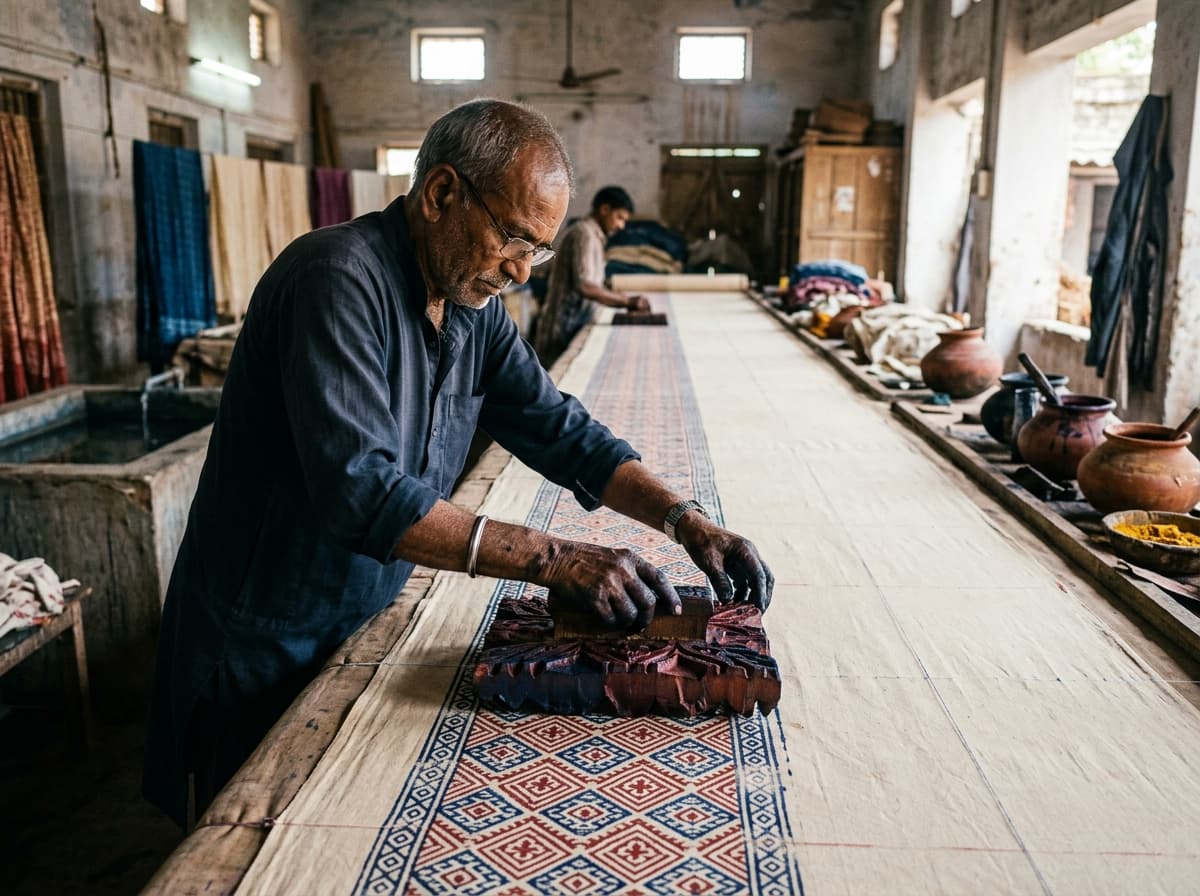
The hands that strike the block, the eyes that count the thread
We do not buy from middlemen or commercial textile mills. Image Cottons works directly with generational artisan families and cooperative craft guilds across India, paying fair living wages and archiving their heritage.
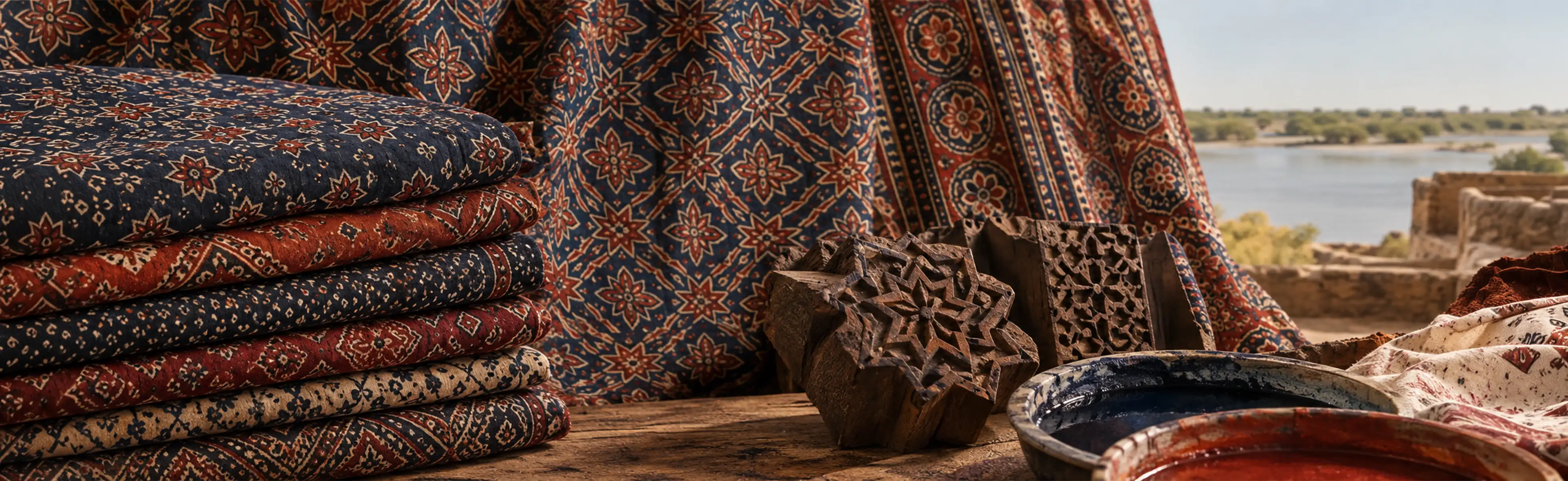
Ajrakhpur & Dhamadka, Gujarat
The Khatri Masters of Kutch
Mastery: Ajrakh & Kala Cotton
The Khatri community has practised the 16-stage resist technique for nine generations. In 2001, after the Bhuj earthquake damaged their historical settlement at Dhamadka, the master dyers established Ajrakhpur — a village designed specifically around pure ground water, sunshine, and natural indigo pit vats.
Cluster Hallmarks:
- Natural fermented indigo vats fed with jaggery and dates
- Two-sided block registration (Biti) done purely by feel and eye
- 100% biodegradable river-safe washing runoff
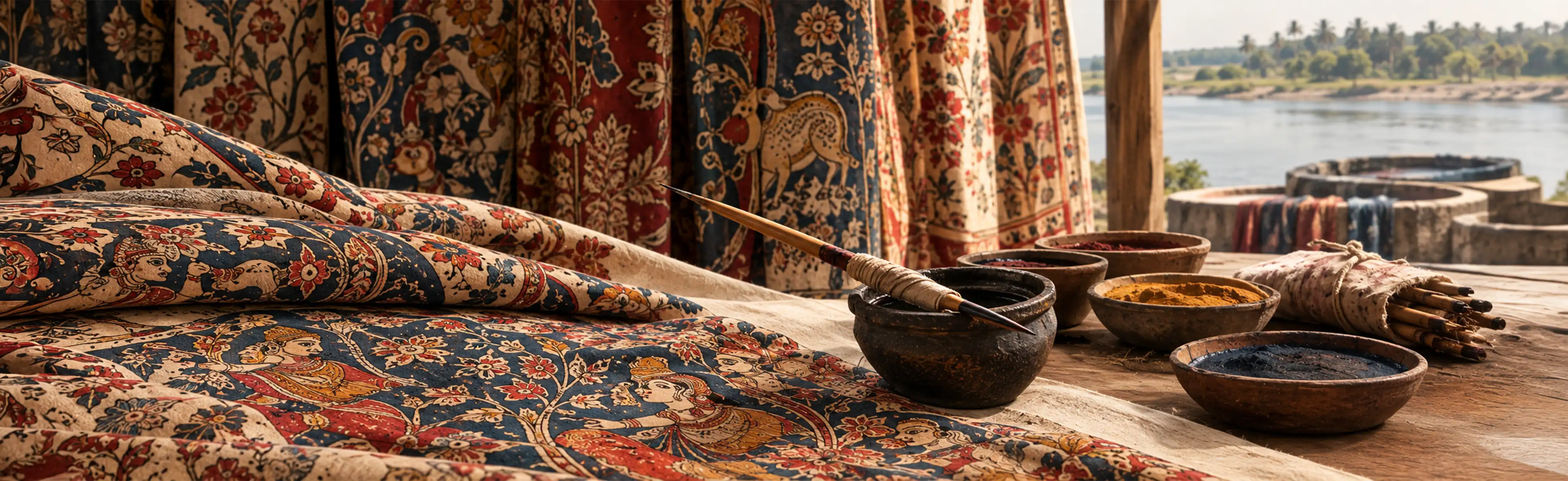
Srikalahasti, Andhra Pradesh
The Swarnamukhi Bamboo Kalam Artists
Mastery: Kalamkari
Unlike block printing, Srikalahasti Kalamkari is an art of pure drawing. Using a sharpened bamboo reed wrapped with woollen thread to regulate the flow of fermented iron Kasim, the artisan draws mythology and botanical epics directly onto raw cotton scoured with buffalo milk.
Cluster Hallmarks:
- Buffalo milk treatment prevents natural dye from bleeding across fibers
- Fermented jaggery and rusted iron filings create indelible black line work
- Twenty-three distinct steps of washing, painting, and sun-fixing
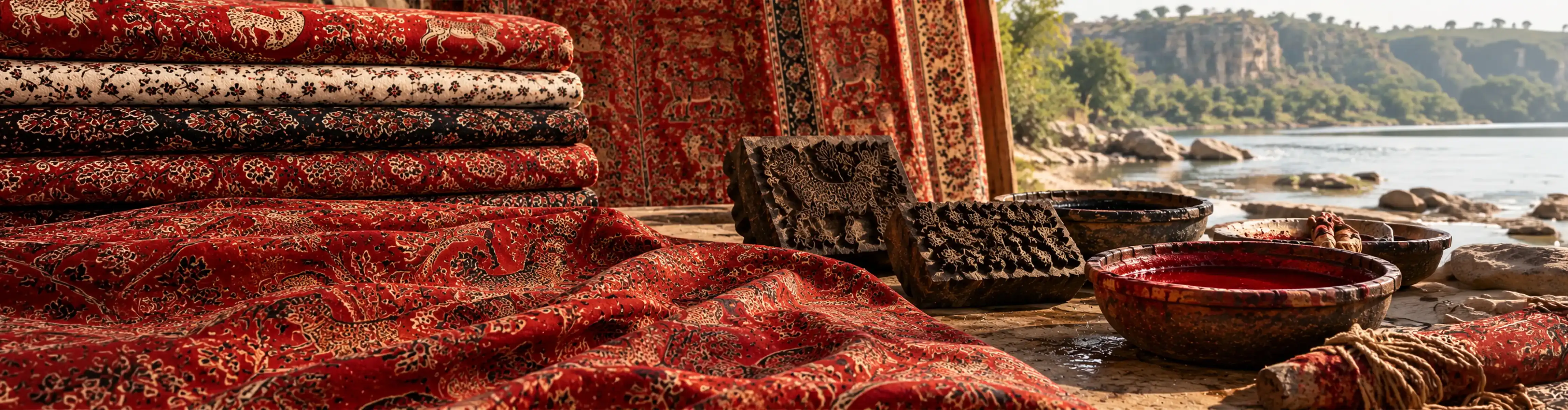
Bagh, Madhya Pradesh
The Riverbed Printers of the Baghini
Mastery: Bagh Print
In the valley beneath the ancient Bagh caves, the Khatri printers work alongside the Baghini River. The river’s high calcium and copper sulphate content reacts with alizarin and Dhavdi flowers to produce a luminous, glowing crimson red that cannot be replicated anywhere else in the world.
Cluster Hallmarks:
- Alizarin red activated solely by river mineral chemistry
- Riverbank sun curing over three sunny afternoons
- Heavy carved teakwood blocks with geometric diamond jali
Phulia & Shantipur, Bengal
The Jamdani Weavers of the Bengal Pit Loom
Mastery: Jamdani Muslin
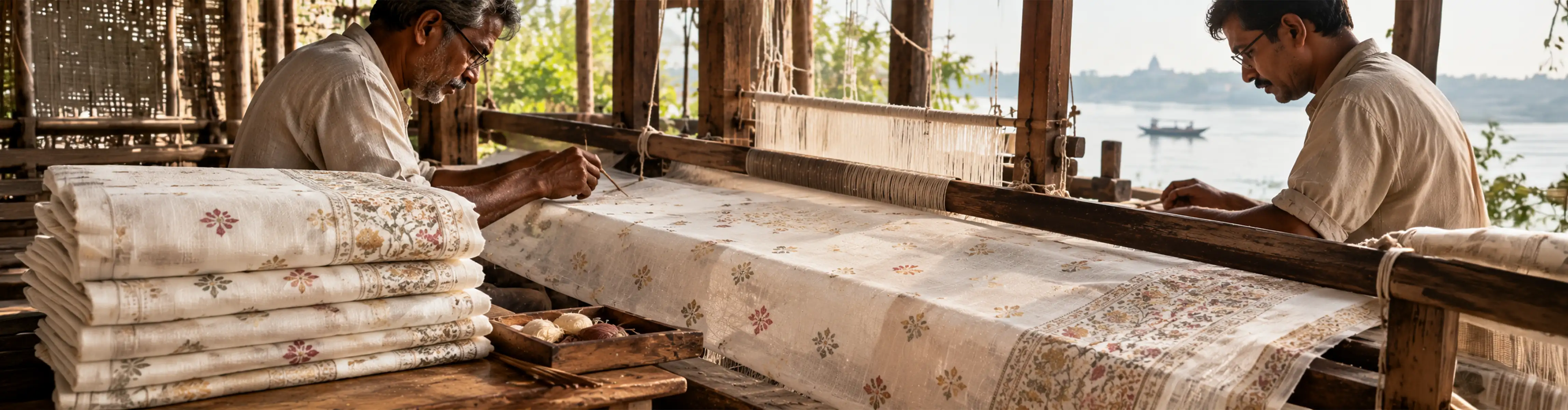
Jamdani weaving is an intangible heritage where two weavers sit side-by-side at a traditional wooden pit loom. As the gossamer 100s count muslin ground is woven, supplementary weft motifs are counted thread by thread and inserted using fine bamboo needles.
Cluster Hallmarks:
- Zero punch cards or jacquard mechanisms — purely human memory
- Discontinuous supplementary weft creates floating motifs
- A single 6-metre bolt requires up to 120 days of weaving
Support the Artisan Guilds
Every metre of cloth commissioned through Image Cottons directly sustains these artisanal families, ensuring traditional pit looms and wood-carving chisels remain active for generations to come.
Shop Hand Block & Hand Woven Cloth